
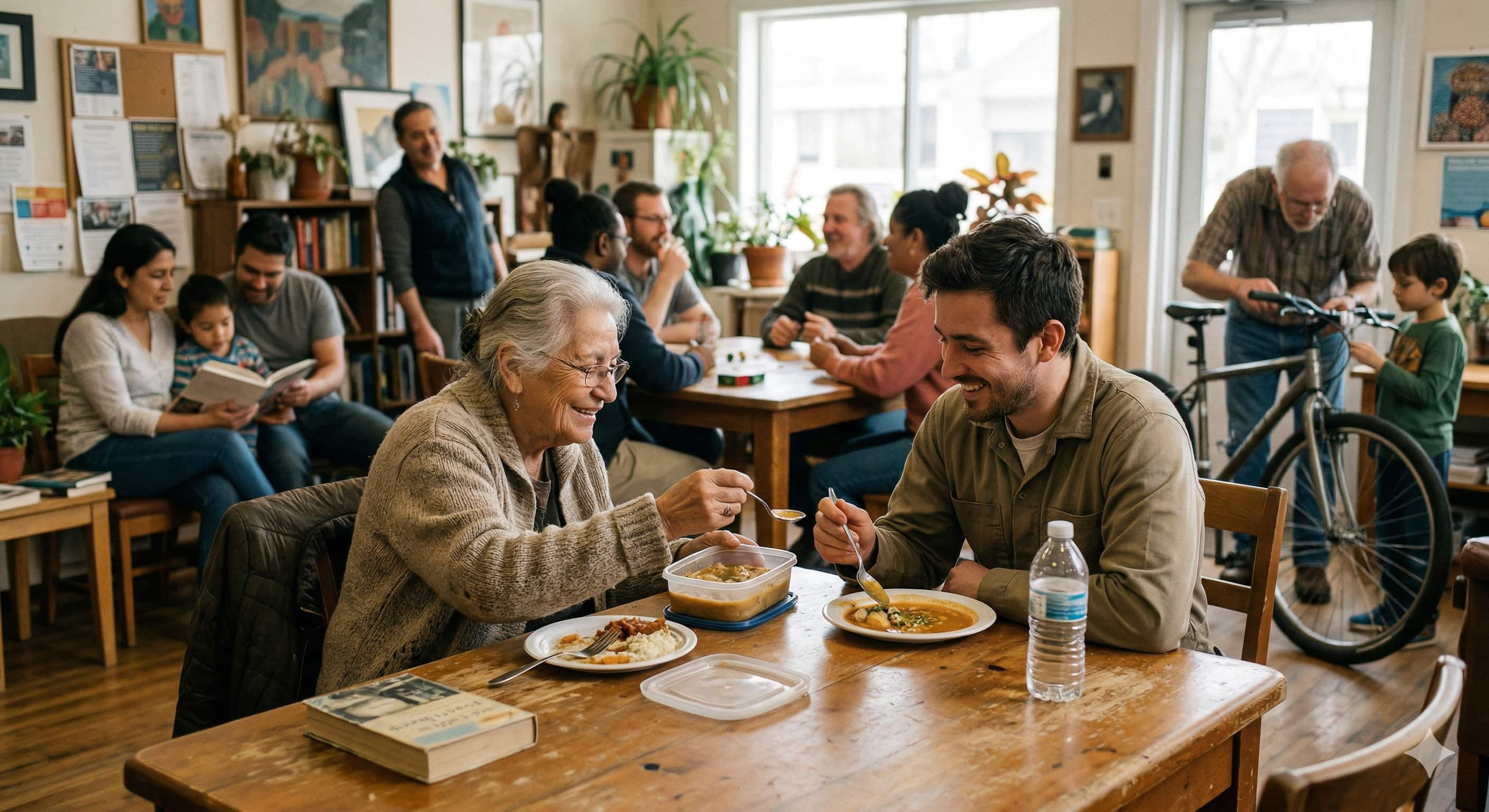
A Reflection on How Culture Quietly Rewrites Itself
Most organizations introduce care as a program.
There’s a rollout.
There’s language.
There’s a defined start and an implied end.
Programs are structured. They’re intentional. And they often begin with genuine care.
But programs also signal something else:
This is additional.
This is optional.
This is something we are trying for now.
Care that lives inside a program is easy to step into and just as easy to step out of.
Care that becomes a norm works differently.
How Norms Actually Form
Norms don’t begin with announcements.
They form through repetition, observation, and quiet reinforcement. People don’t agree on norms formally. They absorb them through experience.
A norm emerges when people begin to assume:
This is how things are done here.
This is what’s acceptable.
This is what happens without needing permission.
Care becomes a norm when acknowledgment, pause, and recognition no longer feel noteworthy.
They just feel normal.
Why Programs Can’t Carry Care Alone
Programs create structure but they also create distance.
They live in calendars, documents, and initiatives. They require participation. They rely on champions. And when priorities shift, they often fade.
Care doesn’t fade because people stop caring.
It fades because care was placed outside the flow of work instead of inside it.
Norms don’t require maintenance meetings.
They sustain themselves.
The Difference Between Participation and Expectation
Programs ask people to participate.
Norms create expectation.
When care is a program, people ask:
Do I have time for this?
Is this relevant to me?
Is this still happening?
When care is a norm, people ask:
Why wouldn’t we acknowledge this?
Why wouldn’t we pause here?
Why wouldn’t this be named?
The shift from participation to expectation is subtle but profound.
How Care Becomes Expected
Care becomes expected not because it’s required, but because it’s reinforced.
People begin to notice patterns:
Effort is acknowledged without ceremony
Strain is named without apology
Pauses are respected without explanation
Over time, these patterns become familiar.
And familiarity is what turns behavior into norm.
Why This Doesn’t Slow Work Down
There’s a fear that normalizing care will soften standards or reduce urgency.
But care as a norm doesn’t interrupt work.
It stabilizes it.
When care is expected:
People don’t waste energy deciding whether it’s appropriate
They don’t brace for misinterpretation
They don’t hold back acknowledgment out of caution
This reduces friction—not productivity.
The Quiet Relief of Not Having to Ask
One of the most powerful shifts when care becomes a norm is this:
People stop asking for permission to be human.
They don’t need to justify a pause.
They don’t need to explain strain.
They don’t need to qualify acknowledgment.
That relief frees up capacity that would otherwise be spent managing perception.
When Care Isn’t Special Anymore
Programs often make care feel special.
There’s a designated time. A special message. A highlighted moment.
Norms make care ordinary.
Ordinary care doesn’t compete with work. It sits alongside it—available, consistent, and unremarkable.
And because it’s unremarkable, it lasts.
Why Norms Are Harder and Stronger
Norms take longer to form than programs.
They aren’t launched.
They aren’t branded.
They aren’t tracked easily.
They spread unevenly. They take root in some places faster than others.
But once established, they don’t require reinforcement campaigns.
They reinforce themselves.
What Changes When Care Is No Longer “Extra”
When care stops being framed as an add-on, something important shifts.
People no longer see it as:
A signal of weakness
A distraction from results
A personal preference
They see it as part of how work is done well.
Care doesn’t compete with performance.
It supports the people who deliver it.
The Organizational Signal That Matters Most
The strongest signal an organization can send is not we care.
It’s this is normal.
When acknowledgment, recognition, and presence are treated as expected rather than exceptional, people adjust their behavior accordingly.
They don’t perform care.
They practice it.
Why This Is So Rare
Care as a norm requires restraint.
It requires organizations to:
Stop announcing every effort
Let go of control over how care shows up
Trust people to carry it forward quietly
This restraint can feel uncomfortable.
But it’s what allows care to belong to everyone—not just to a program.
A Closing Reflection
Programs introduce care.
Norms sustain it.
When care becomes part of what people expect not something they opt into it stops feeling like an initiative and starts feeling like culture.
And culture, once established, doesn’t need reminding to exist.
At SUUM, we believe workplace wellness begins with one quiet truth:
U Matter – even here.
Frequently Asked Questions
What is the culture of self reflection?
The culture of self-reflection refers to an environment where individuals and groups regularly and critically examine their beliefs, actions, and values. It encourages a continuous process of introspection and evaluation to understand motivations, identify areas for improvement, and adapt to new insights. This goes beyond simple introspection; it's about fostering a community where questioning assumptions and learning from experiences are embedded in daily practices, leading to a thoughtful evolution of norms and understandings, much like A Reflection on How Culture Quietly Rewrites Itself.
How can learning about another culture change the way we see our own culture?
Learning about another culture offers a unique lens through which to examine our own. It highlights aspects we might take for granted, revealing both the strengths and potential limitations of our cultural norms. This process can spark "A Reflection on How Culture Quietly Rewrites Itself," showing us that what we consider universal is often culturally specific. By understanding diverse perspectives, we gain a deeper appreciation for our own cultural foundations while also identifying areas for growth and evolution. It fosters empathy and broadens our understanding of the human experience.
What are the 3 P's of culture?
The "3 P's" of culture often refer to People, Process, and Place. People represent the individuals within an organization and their shared values. Process signifies the methods and workflows used, while Place refers to the physical or virtual environment where work happens. These elements are interconnected and constantly influence A Reflection on How Culture Quietly Rewrites Itself as an organization evolves, shaping how care becomes a norm rather than just a program.
What are the 5 C's of reflection?
The 5 C's of reflection are a framework to help you systematically analyze experiences and learn from them. They stand for: 1. Context: What was the situation or environment? 2. Challenge: What difficulties or problems arose? 3. Choices: What actions did you consider or take? 4. Consequences: What were the outcomes of your choices? 5. Correction/Change: What will you do differently next time? This structured approach is valuable for personal and professional growth, including understanding how cultural norms evolve, much like "A Reflection on How Culture Quietly Rewrites Itself" explores.
What are the 7 points of culture?
The "7 points of culture" is not a universally recognized academic or business framework. While various models exist to describe cultural aspects (like Hofstede's Dimensions or the 7 Cs of Culture), there isn't a standard, widely accepted list of "7 points." Often, when this phrase is used, it refers to specific cultural values or principles established within a particular organization or community. Therefore, to understand what someone means by the "7 points of culture," it's essential to ask for clarification on the specific context they are referring to, as culture is constantly rewriting itself.